July 6, 2026 · 7 min read
Why Is My Hair Thinning But Not Falling Out
Hair thinning not falling out usually means the visible change is happening through density, strand thickness, styling behavior, or breakage rather than dramatic shedding. Here is how to tell what kind of change you are actually seeing.
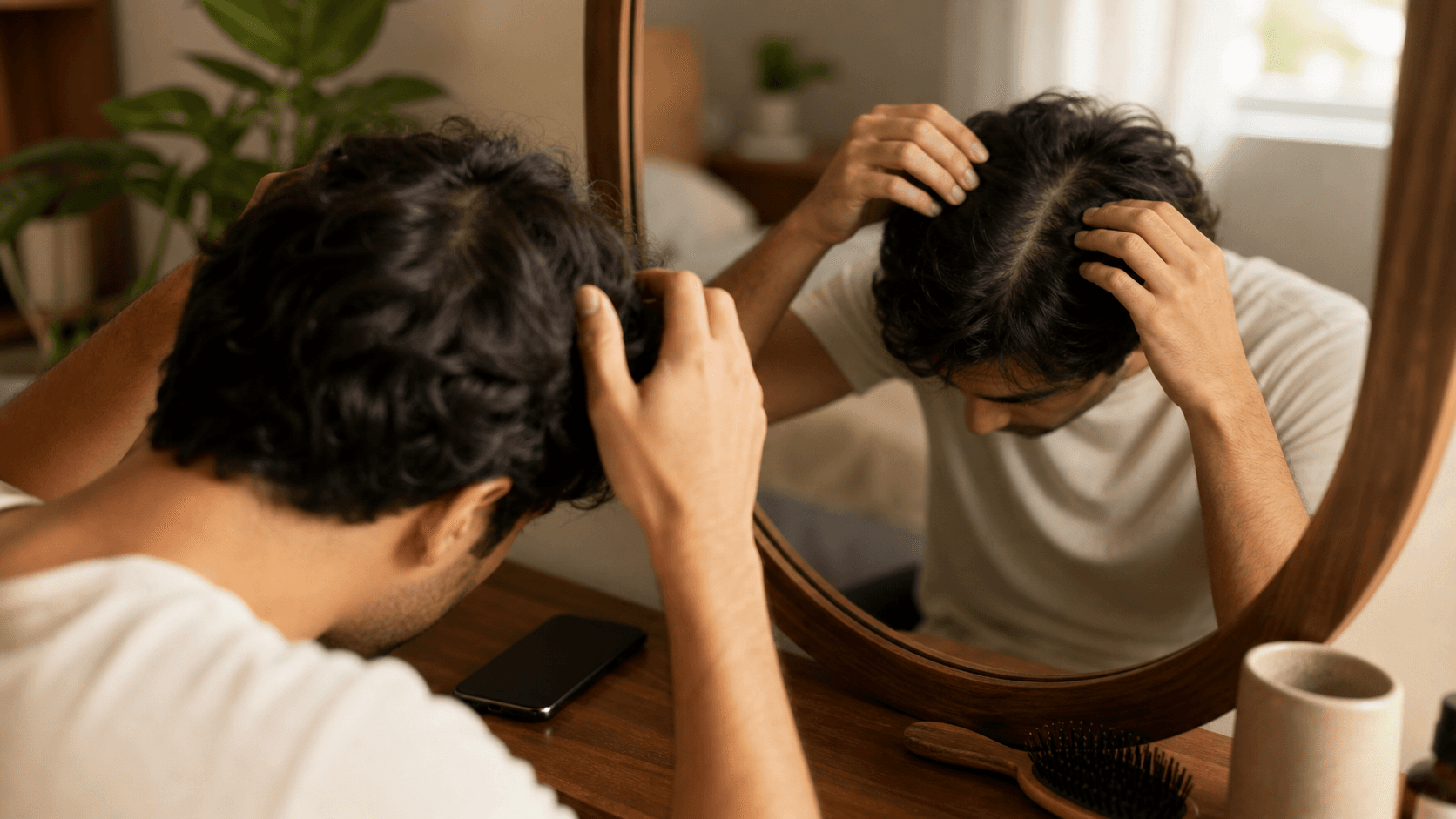
The short version
- Hair can look thinner even when you are not seeing dramatic shedding.
- Density changes, finer strands, breakage, oil, and styling collapse can all make hair look thinner.
- The most useful clue is whether the same areas look different under the same conditions.
- Shower hair is only one signal. Photos, styling behavior, and part visibility matter too.
- Weekly tracking gives you a clearer answer than checking the mirror every time your hair sits badly.
You are not pulling clumps from the shower drain. Your pillow is not covered. Your hands are not full of strands after shampooing. Still, something looks different.
That is what makes hair thinning not falling out so frustrating. The obvious evidence is missing, but the mirror keeps giving you a signal. Your part looks wider. Your crown catches more light. Your hair lies flatter. The same style needs more effort than it used to.
This article breaks down why hair can look thinner without dramatic shedding and how to tell whether the change is real.
Thinning and shedding are not the same signal.
Shedding is about hair leaving your head. Thinning is about how much coverage your hair creates while it is still on your head.
Those two things can overlap, but they do not always show up together. You can have normal-looking shower shedding and still notice less coverage, weaker volume, or more scalp visibility. You can also have a heavy shed day that looks scary but does not change how dense your hair looks overall.
This is why the drain is not the whole story.
Hair thinning not falling out often shows up through small visual changes:
- The part looks wider.
- The crown looks brighter.
- The front feels less dense.
- Hair separates faster during the day.
- Styling product starts feeling too heavy.
- Your haircut sits flatter than it used to.
None of those require dramatic clumps. They are coverage signals, not just shedding signals.
Your strands can look finer before you notice less hair.
Sometimes the issue is not that you suddenly have far fewer hairs. It is that the hairs no longer create the same visual weight.
Think about volume. It comes from the number of strands, the thickness of each strand, the way those strands hold shape, and how cleanly they separate. If any of those change, hair can look thinner even when you are not seeing obvious fallout.
This is why people often notice styling problems first.
The front will not lift. The crown collapses. The sides look flatter. Your hair gets oily faster because there is less volume hiding the shine. A product that used to work now makes everything look separated.
That kind of shift can feel vague, but it is still useful. Your hair is telling you its behavior changed.
Do not judge it on your best styling day. Look at your normal hair, under normal light, when it is dry. If the same part or crown area keeps looking less full, the pattern matters.
scalp showing through hairBreakage can mimic thinning without much shedding.
Breakage is sneaky because it can make hair look thinner while the root-level shedding still seems normal.
Shed hairs usually look like full-length strands. Breakage often looks shorter. You may see little pieces in the sink, rough ends, more frizz, or uneven lengths around the hairline and crown. The hair may still be attached at the root, but it no longer contributes the same coverage through the lengths.
Breakage also changes texture. Hair can feel rougher, snag more easily, and lose shape faster. If your ends look see-through but your shower shedding is not higher than usual, breakage may be part of the picture.
Full strands
Full-length hairs suggest shedding. The strand looks like the length you expect for your haircut.
Short pieces
Short fragments point more toward breakage. They often show up after brushing, towel drying, heat styling, or rough detangling.
Hair thinning not falling out becomes easier to understand once you separate coverage, shedding, and breakage instead of treating them as one problem.
Oil, lighting, and wet hair can fake a thinning pattern.
Your hair can look thinner for reasons that have nothing to do with a real density change.
Oil makes strands clump together, which exposes more scalp between them. Wet hair does the same thing. Harsh overhead light hits the scalp directly and makes the crown or part look brighter. A fresh haircut can remove bulk and make the top look flatter. Heavy product can pull hair down and separate it.
That does not mean you should ignore what you see. It means you should test it fairly.
Check your hair when it is dry, clean, and in normal lighting. Use the same spot each time. Take one front photo, one crown photo, and one part photo. Do not compare wet bathroom mirror hair to an old outdoor photo and call that evidence.
The key is repeatability. If the hair only looks thin under one harsh light, that is weak evidence. If it looks thinner under the same conditions week after week, the signal gets stronger.
crown thinning or hair partThe best answer comes from tracking the same angles.
If you are dealing with hair thinning not falling out, you need more than a drain check. You need a baseline.
Take the same four photos once a week: front, crown, left, and right. Use dry hair. Use the same lighting. Keep the camera distance boringly consistent. Add a short note about styling, wash timing, oiliness, and whether your hair felt flatter than usual.
Also write down what changed in real life. Did you switch shampoo? Start wearing hats more often? Go longer between washes? Use heavier product? Get a shorter haircut? Those details do not explain everything, but they keep you from blaming your hair for a change that came from routine, lighting, or styling.
After four weeks, compare the set.
If the photos look stable, you can stop treating every bad hair day like proof. If the same zones keep looking less dense, you have a pattern worth acting on.
This is where Morph fits naturally. The app is built around guided scans, a Hair Health Score, and weekly tracking, so you can stop guessing from random mirror checks. If you want a repeatable way to understand your baseline, you can join the waitlist here: Morph waitlist
Frequently asked questions
Can hair thin without falling out?
Yes. Hair can look thinner because of reduced density, finer-looking strands, breakage, oil, or styling collapse. You may not see dramatic shedding even though coverage has changed.
Why does my hair look thinner but I am not shedding more?
The visible change may be about how your hair sits, separates, or covers the scalp. If your part, crown, or hairline looks different under the same conditions, track that pattern instead of relying only on shower hair.
Is hair thinning not falling out the same as breakage?
Not always. Breakage is one possible cause of thinner-looking hair, especially if you see short pieces and rough ends. Thinning can also come from density or strand changes near the scalp.
How do I know if it is just lighting?
Use the same light and angle every time you check. If the thinning only appears under harsh overhead lighting, it may be exaggerated. If the same area looks different in repeatable photos, it is more meaningful.
Should I worry if my part looks wider?
A wider part is worth tracking if it shows up when your hair is clean, dry, and parted the same way. Wet or oily hair can make any part look wider.
How long should I track before deciding it is real?
Four weeks is a useful starting point. One bad photo is noise. Repeated photos showing the same direction are signal.
What should I track besides photos?
Track styling volume, wash timing, oiliness, breakage pieces, and whether your hair separates faster during the day. Those details help explain what the photos show.
Early access
Know exactly what's wrong with your hair
Morph scans your scalp with AI, gives you a Hair Health Score across 4 dimensions, and builds your personalised 12-week plan based on your actual results, not generic advice.
Join the waitlist →More from Morph
All articles6 min read
Best Apps To Track Hair Growth And Loss In 2026
The best hair growth tracker app is the one that helps you take consistent photos, compare the same zones, and understand whether your routine is actually changing anything. In 2026, tracking matters more than another folder of random camera roll photos.
6 min read
What Is A Hair Health Score And How Is It Calculated
A hair health score turns your hairline, density, thickness, and scalp condition into one trackable number. The useful part is not the score by itself, but how it changes over time.