July 7, 2026 · 6 min read
Best Apps To Track Hair Growth And Loss In 2026
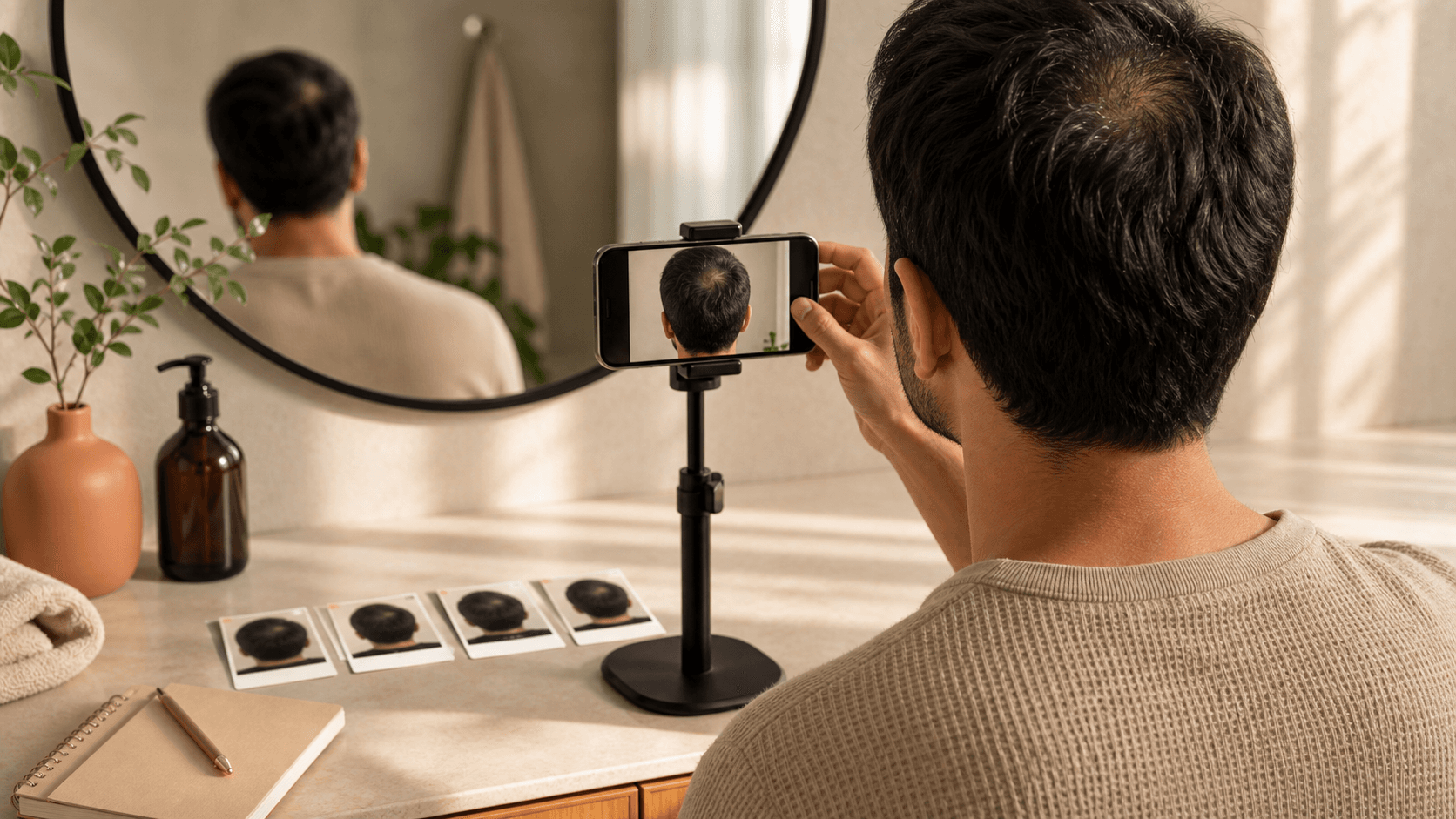
The best hair growth tracker app is the one that helps you take consistent photos, compare the same zones, and understand whether your routine is actually changing anything. In 2026, tracking matters more than another folder of random camera roll photos.
The short version
- The best hair tracking apps make your photos consistent, not just stored.
- A good app should track front, crown, left, and right angles over time.
- Scores, reminders, notes, and routine tracking are useful only if they connect back to visible progress.
- Camera roll folders are better than nothing, but they get messy fast.
- Morph is built for guided scans, a Hair Health Score, and a 12-week routine loop.
The problem with tracking hair growth is not that you forget to take photos. The problem is that every photo tells a different story.
One is under harsh bathroom light. One is after a haircut. One is taken with wet hair. One is zoomed in so far that every strand looks dramatic.
That is why finding the best hair growth tracker app matters. You need a system that makes comparison fair, not a prettier place to store anxiety photos.
Here is what to look for in 2026, which app types actually help, and where Morph fits if you want guided scanning instead of guessing.
The best app starts with repeatable photos.
Hair tracking lives or dies on photo consistency.
If an app does not help you take the same photo again, it is not solving the real problem. It might store images. It might add reminders. It might let you write notes. Those features are useful, but they come after the basics.
The app should help you repeat:
- Same angles
- Same lighting
- Same distance
- Same hair state
- Same zones
For hair loss and hair growth tracking, the most useful views are front, crown, left side, and right side. These cover the areas where visible changes usually show up first.
The best hair growth tracker app is not the one with the most features. It is the one that stops you from comparing a wet-hair crown photo to a dry-hair front photo and calling that progress.
how to track hair growth photosCamera roll folders are the baseline option.
Your phone’s camera roll can work if you are disciplined.
Create one album. Take the same four photos every week. Rename or sort them by date. Add a note somewhere else about haircut timing, wash day, product, and lighting.
This is free and simple, which is the upside.
The downside is that it falls apart quickly. Camera roll photos get mixed with screenshots, selfies, vacation photos, and random mirror checks. You start zooming into one bad image instead of comparing matched sets. Notes live in another app. The routine lives somewhere else. The pattern gets blurry.
Camera roll tracking is good enough for a first baseline. It is not ideal if you want to understand change over months.
track hair loss progressHabit trackers help with routine, but not evidence.
Habit apps are useful when your main problem is consistency.
They can remind you to wash, massage, take progress photos, avoid over-styling, or follow a weekly routine. A streak can make the routine feel more concrete.
But habit trackers do not tell you whether your hair looks different. They track behaviour, not visible change.
That matters because consistency alone is not the full answer. You can complete every routine task and still have no clear sense of whether your hairline, crown, density, or scalp condition is improving. You need evidence alongside the habit.
The better setup is habit tracking plus visual tracking. The routine tells you what you did. The photos tell you what changed.
If an app only gives you streaks, treat it as a support tool, not your main hair tracker.
Notes apps are flexible, but too loose for long-term tracking.
A notes app can hold everything: photos, dates, routine notes, styling changes, stress notes, haircut timing, and reminders.
That flexibility is useful. It also creates mess.
Most people start strong, then the format changes. Week one has four photos and three notes. Week two has two photos and a paragraph. Week three has one crown photo and a worried sentence written at midnight.
That kind of tracking feels productive, but it is hard to compare.
If you use a notes app, create a template and reuse it exactly:
- Date
- Front photo
- Crown photo
- Left photo
- Right photo
- Wash day
- Product used
- Haircut age
- One sentence on what looked different
The structure matters more than the app.
AI hair tracking apps are the strongest option when they explain the result.
AI can be useful for hair tracking, but only if it gives you a clear framework.
A vague “your hair looks healthy” result is not enough. You need to know which part of the scan drove the result. Was it density? Hairline shape? Scalp visibility? Thickness? Scalp condition?
That is why Morph uses a Hair Health Score across four dimensions:
- Scalp Health
- Hair Density
- Hairline
- Thickness
This turns a photo check into a tracking loop. You scan the same views, get a score, follow a personalised 12-week routine, then rescan weekly to compare your baseline against new evidence.
For most people, that is the missing piece. They do not need another place to dump photos. They need help taking the right photos and understanding what changed.
hair health scoreWhat to look for before choosing an app
Use this checklist before you trust any tracker:
- Does it guide the photo angles?
- Does it compare the same zones over time?
- Does it let you add context like wash day, haircut, and product?
- Does it separate density, hairline, scalp, and thickness signals?
- Does it help you follow a routine?
- Does it make trends easier to see, not harder?
The best hair growth tracker app should make you calmer because the evidence is clearer. If it makes you check more often without understanding more, it is not helping.
Frequently asked questions
What is the best app to track hair growth?
The best app is one that helps you take consistent photos, compare the same zones, and track routine context. Morph is built around guided scans, a Hair Health Score, and weekly progress tracking.
Can I track hair growth with my camera roll?
Yes, but you need discipline. Use the same four angles every week and keep them in one album, otherwise the photos become hard to compare.
What photos should a hair tracker app ask for?
Front, crown, left side, and right side photos are the most useful set. They cover the areas where visible hairline and density changes tend to show up first.
Is AI useful for tracking hair loss?
AI is useful when it organizes visible evidence into clear dimensions. It is not useful if it gives a vague result without showing what changed.
How often should I use a hair tracking app?
Once a week is enough for photos and scoring. Monthly comparisons are better for judging real trends.
What makes Morph different from a normal photo tracker?
Morph guides the scan, gives a Hair Health Score across four dimensions, and connects the result to a personalised 12-week routine. It is built for tracking progress, not just storing pictures.
Early access
Know exactly what's wrong with your hair
Morph scans your scalp with AI, gives you a Hair Health Score across 4 dimensions, and builds your personalised 12-week plan based on your actual results, not generic advice.
Join the waitlist →More from Morph
All articles6 min read
What Is A Hair Health Score And How Is It Calculated
A hair health score turns your hairline, density, thickness, and scalp condition into one trackable number. The useful part is not the score by itself, but how it changes over time.
7 min read
Why Is My Hair Thinning But Not Falling Out
Hair thinning not falling out usually means the visible change is happening through density, strand thickness, styling behavior, or breakage rather than dramatic shedding. Here is how to tell what kind of change you are actually seeing.