June 26, 2026 · 7 min read
Does Wearing A Hat Cause Hair Loss? The Real Answer
Does wearing a hat cause hair loss? Usually, no. The real answer depends on fit, friction, scalp comfort, and whether the same areas look different after you take the hat off.
The short version
- Normal hat wearing does not usually cause hair loss.
- A tight hat can leave dents, flatten volume, or irritate the scalp, which can make hair look worse temporarily.
- The real clue is whether the same hairline, crown, or temple areas look different without the hat.
- Hat hair, oil, sweat, and compression can all fake a thinning pattern.
- If you are worried, compare clean, dry hair under the same conditions instead of judging right after removing a hat.
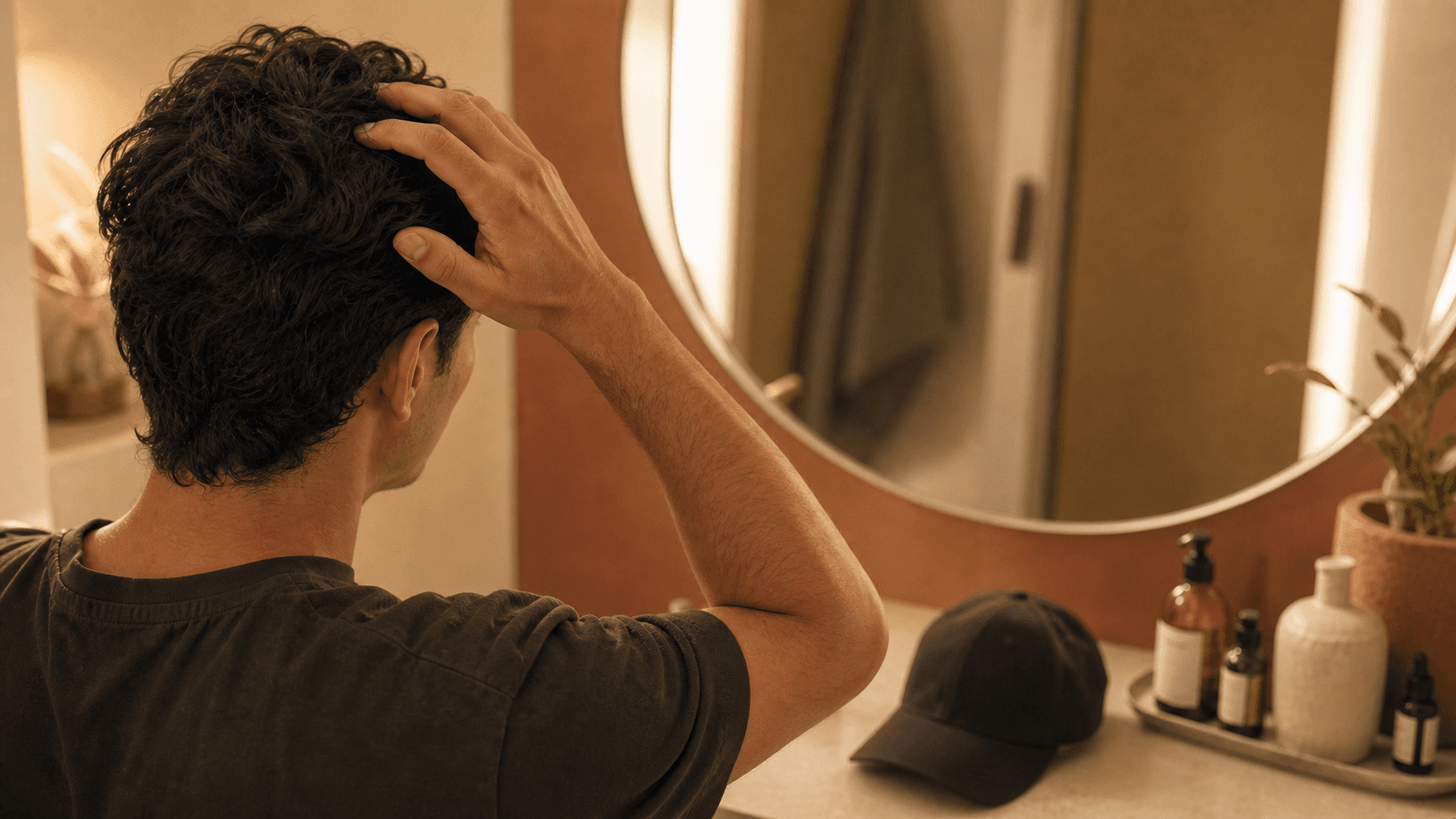
You take off your cap, check the mirror, and your hair looks awful. Flat at the front. Separated at the crown. Maybe a few strands stuck inside the hat. Suddenly the question feels obvious: does wearing a hat cause hair loss?
Most of the time, no.
But that answer is too simple if you are staring at your hairline and already anxious. Hats can absolutely make hair look thinner for a few hours. They can press the roots down, trap oil and sweat, and expose scalp where your hair separates. That is not the same as causing real hair loss.
Here is how to tell the difference between hat hair and a pattern worth tracking.
Hat hair is mostly compression, not hair loss.
A hat changes the way your hair sits. It presses roots flat, pushes strands into the same direction, and traps heat around the scalp. When you take it off, the shape can look totally different from your normal hair.
That is why hat hair often looks like thinning.
The front can sit lower. The crown can separate. The part can look wider. If your hair is fine, oily, curly, or styled with product, the effect can be even stronger. You are seeing compressed hair, not necessarily fewer hairs.
The first check should happen after your hair resets. Shake it out, let it dry if it is damp, and look again under normal light. If the concern disappears, the hat probably created a temporary styling problem.
If the same area still looks thinner when your hair is clean, dry, and not compressed, then it is worth tracking.
scalp showing through hairTight hats create friction and irritation.
The hat itself is not usually the issue. Fit is.
A hat that is too tight can rub the same spots over and over. The front edge, temples, and crown are common pressure zones. You might notice redness, tenderness, itchiness, or a line where the hat sat. That does not automatically mean damage, but it is a sign the fit is wrong.
Friction also makes hair look worse. It roughs up the surface, breaks the style, and can pull small hairs out of place. If you already have a softer hairline, a tight cap can make that softness more obvious when you remove it.
The fix is practical: loosen the fit, rotate styles, avoid wearing damp hair under a tight hat, and give your scalp a break if it feels irritated.
Does wearing a hat cause hair loss on its own? A normal, comfortable hat is not the villain. A tight, sweaty, constant pressure point can make your hair and scalp look worse.
Sweat and oil can fake a thinning pattern.
Hats trap heat. Heat means sweat. Sweat and oil make strands clump together, and clumped strands expose more scalp between them.
That is why your crown or part can look more visible after a long day in a cap. The hair did not vanish. It grouped into sections, which changed the way light hit your scalp.
Product makes this more noticeable. Styling cream, wax, pomade, and dry shampoo can all build up at the roots. Add a hat on top, and the hair gets flattened into separated pieces.
Judge your hair after a clean reset:
- Wash or rinse if needed
- Let the hair dry fully
- Do not check under harsh overhead light
- Compare to your usual style, not your hat-flattened style
- Look at the same area again the next day
The honest comparison happens after the variables are gone.
hair loss vs sheddingLoose strands inside a hat are not proof.
Finding hair inside a hat feels personal because it is right there, stuck in the fabric. But loose strands can collect anywhere your hair touches: pillowcases, hoodies, towels, headphones, brushes, collars, and hats.
The hat may be catching hairs that were already loose.
Look at the pattern. Are you seeing a few strands after a full day of wear? That is normal. Are you seeing repeated pulling from one tight seam or strap? That is a fit problem. Are you seeing visible coverage change in the same area even when you are not wearing hats? That is a different signal.
Do not use the hat as your only evidence.
The better evidence is visual coverage over time: front, crown, temples, and part line. If those zones look stable in weekly photos, a few hairs inside a cap are not worth spiraling over.
How to check fairly if hats worry you
Do a simple two-week reset.
For one week, wear hats normally but take a baseline photo on clean, dry hair before the hat goes on. For the next week, limit hat wear and take the same photo in the same light. Compare the photos, not the mirror immediately after removing the hat.
Look for repeatable differences:
- Does the hairline shape actually change?
- Does the crown look brighter when hair is clean and dry?
- Does the part look wider without compression?
- Does the scalp feel irritated in the same pressure zones?
- Does the issue disappear after washing and drying?
This turns the question from “does wearing a hat cause hair loss?” into something more useful: “what does my hair look like when I remove compression, oil, and lighting noise?”
That is the kind of comparison Morph is built around. Guided scans help you check the same zones over time instead of judging your hair in the worst possible post-hat mirror moment. track hair loss progress
Frequently asked questions
Does wearing a hat cause hair loss if I wear one every day?
Normal daily hat wearing usually does not cause hair loss. The bigger concern is a hat that is too tight, traps sweat constantly, or rubs the same areas until your scalp feels irritated.
Why does my hair look thinner after wearing a hat?
The hat compresses roots and makes strands sit closer together. Sweat, oil, and product can also make hair separate, which exposes more scalp temporarily.
Can a tight hat damage my hairline?
A tight hat can irritate the hairline and create friction, especially if it rubs the same spot all day. If your scalp feels sore or marked after wearing it, loosen the fit or take breaks.
Is hair inside my hat a bad sign?
Not by itself. Hats can catch loose hairs that were already ready to shed. It becomes more useful to track if loose hair comes with repeatable visual changes in your hairline, crown, or part.
Should I stop wearing hats if I am worried about thinning?
You do not need to quit hats completely. Wear a comfortable fit, avoid trapping wet hair for long periods, wash hats regularly, and judge your hair after it resets.
What is the best way to check if my hat is affecting my hair?
Take weekly photos of clean, dry hair before wearing a hat. Compare the same angles over time instead of judging your hair right after removing the hat.
Early access
Know exactly what's wrong with your hair
Morph scans your scalp with AI, gives you a Hair Health Score across 4 dimensions, and builds your personalised 12-week plan based on your actual results, not generic advice.
Join the waitlist →More from Morph
All articles6 min read
Best Apps To Track Hair Growth And Loss In 2026
The best hair growth tracker app is the one that helps you take consistent photos, compare the same zones, and understand whether your routine is actually changing anything. In 2026, tracking matters more than another folder of random camera roll photos.
6 min read
What Is A Hair Health Score And How Is It Calculated
A hair health score turns your hairline, density, thickness, and scalp condition into one trackable number. The useful part is not the score by itself, but how it changes over time.