July 5, 2026 · 7 min read
How Much Hair Loss In The Shower Is Actually Normal
If you are wondering how much hair loss is normal after a shower, the useful answer depends on your baseline, wash schedule, and whether the pattern keeps repeating. Here is how to tell normal shedding from a change worth tracking.
The short version
- Shower shedding looks worse than it is because loose hairs collect all at once.
- The number matters less than whether it is higher than your normal for several washes in a row.
- Long, curly, thick, or dark hair makes the drain look more dramatic.
- Wash timing changes the picture. If you skip wash days, more loose hair comes out in one shower.
- The useful move is to track the pattern weekly, not inspect every strand like evidence.
You look down after shampooing and there it is: hair on your hands, hair on the shower wall, hair circling the drain. The first question is usually simple and slightly panicked: how much hair loss is normal, and is this too much?
The annoying answer is that shower hair can look dramatic even when nothing unusual is happening. The useful answer is more specific. Normal shedding has a pattern. Concerning shedding has a pattern too. This guide will help you tell the difference without counting every strand or turning one shower into a crisis.
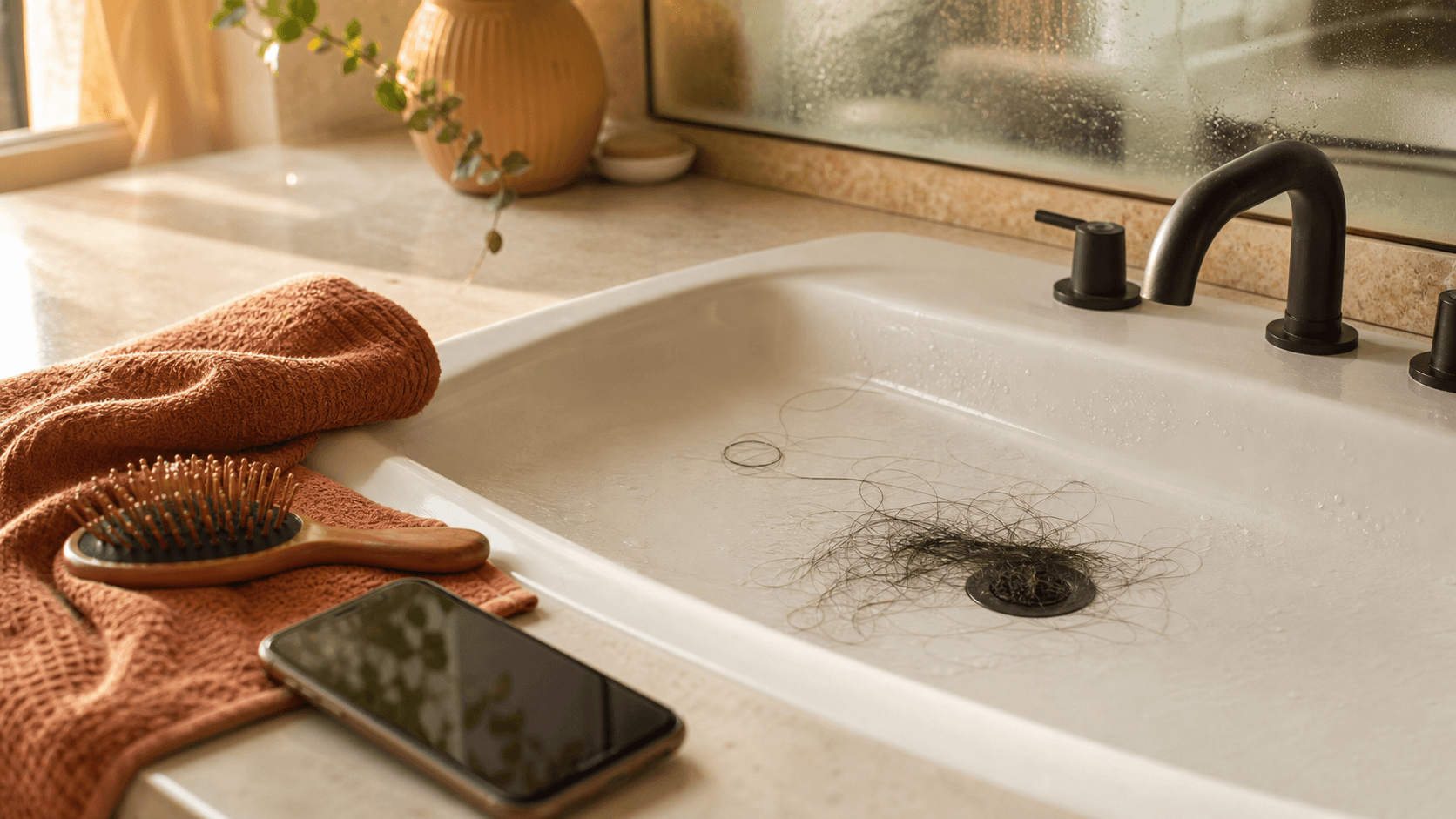
Shower hair looks dramatic because it collects in one place
Most shed hairs do not fall neatly throughout the day where you can see them. They sit loosely in your hair until something moves them out. Shampooing does that. So does conditioning, detangling, towel drying, brushing, and running your fingers through your hair.
That is why the shower feels like the scene of the crime. It is not always where the shedding happened. It is where the evidence finally gathered.
If your hair is longer, the pile looks bigger. One long strand can wrap around itself and make the drain look full. Curly or coily hair can hold loose strands in place until wash day, so several days of shedding can appear at once. Dark hair against a white tub also looks more intense than light hair against the same surface.
This is why the mirror test after a shower is unreliable. Wet hair clumps. Scalp shows through. The hairline looks flatter. Ten minutes later, when your hair is dry, the picture can look completely different.
So before you decide something is wrong, ask one better question: does this amount look unusual for you, or does it only look scary because it is visible?
The normal amount depends on your wash schedule
There is no perfect shower number that works for everyone.
If you wash every day, loose hairs get cleared out more often, so each shower usually looks lighter. If you wash every three or four days, you are seeing several days at once. That can make a normal amount look sudden.
The same thing happens after hats, heavy product use, or days when you barely brush your hair. Loose strands do not disappear. They wait.
Daily washing
You might see a small amount most days. A random heavier shower can happen after a rough detangling session or a day when your hair was tied back tightly.
Washing every few days
You should expect more visible shedding in a single shower. The better comparison is not "how much came out today?" It is "does this look heavier than my usual wash day?"
Washing once a week
The drain can look dramatic even when the average over the week is ordinary. Weekly washers need to judge the trend month to month, not one wash at a time.
If you are asking how much hair loss is normal, your wash rhythm is part of the answer. Without that context, the number can trick you.
A change from your baseline matters more than a strand count
Counting hairs sounds precise, but it usually makes you more anxious without making you more accurate. Wet strands stick together. Some break. Some are old shed hairs that were trapped in your style.
The better method is boring: create a baseline.
For the next two weeks, rate each wash as low, normal, or high. Keep the labels simple. Write one short note about the context: washed after two days, washed after four days, used more product, wore a hat, detangled before showering.
After a few washes, the pattern becomes clearer. One high day means very little. Three or four high wash days in a row tells you more.
Look for these changes:
- The drain looks fuller than usual every wash.
- Your hands come away with more hair each time you shampoo.
- You notice extra shedding outside the shower too.
- Your hair feels thinner to style, not just messier when wet.
- Photos show a wider part, brighter crown, or changing hairline at the same time.
That last point matters. Shower shedding by itself is noisy. Shower shedding plus visible density changes is a stronger signal.
crown thinning or hair partBreakage can look like shedding, but it tells a different story
Not every hair in the shower is a full shed strand. Some of it is breakage.
Shed hair usually has the full strand length you would expect. Breakage is often shorter. It can show up as little pieces near the ends, around the hairline, or after rough brushing. If you keep seeing short fragments rather than full-length strands, the issue may be hair shaft weakness rather than a change at the root.
That distinction matters because the tracking looks different.
With shedding, you are watching the amount of full strands coming out over time. With breakage, you are watching texture, snapping, frizz, uneven ends, and whether your hair holds its shape. Your hair can look thinner from breakage even if the scalp is not shedding more than usual.
A simple check helps: after your shower, look at a few strands on your hand or towel. Are they mostly full length, or are they short broken pieces? You do not need a microscope. You need a pattern.
If the shower hair is mostly full length and keeps increasing, track shedding. If it is mostly short pieces and your ends look rough, track hair quality and styling behavior.
When shower shedding is worth taking seriously
Normal shedding has ups and downs. A concerning pattern keeps showing up.
Take it seriously if the amount is clearly higher than your baseline for several weeks, especially if it comes with visible changes in photos. A brighter crown, wider part, thinner temples, flatter volume, or changing hairline all matter more than one drain photo.
The fastest way to get clarity is to stop changing the conditions.
Use the same shower routine for a few weeks if you can. Take hair photos once a week, not ten times a day. Use dry hair, the same lighting, and the same angles: front, crown, left, and right. Add a short note about wash frequency and shedding level.
Then compare the set after four weeks.
This is where a tool like Morph fits naturally. The point is not to obsess over more details. It is to make the details repeatable, so you can see whether the pattern is real. If you want a consistent scan, score, and routine built around your actual baseline, you can join the waitlist here: Morph waitlist
track hair loss progressFrequently asked questions
How much hair loss is normal in the shower?
The normal amount depends on how often you wash, your hair length, your texture, and your usual baseline. A bigger pile after several days without washing can still be normal. A repeated increase from your usual wash-day amount is the part worth tracking.
Is it normal to lose more hair when shampooing?
Yes. Shampooing moves loose hairs out all at once, so the shower often shows shedding more clearly than the rest of the day. The question is whether each wash looks heavier than your normal for several weeks.
Why do I lose more hair when I skip wash days?
Loose hairs can stay trapped in your hair until water, shampoo, and detangling pull them free. If you skip wash days, several days of shed hair can appear in one shower, which makes the amount look sudden.
Should I count the hairs in the drain?
No, not as a daily habit. Counting strands sounds accurate, but it usually creates more anxiety than clarity. Rating each wash as low, normal, or high gives you a better trend without turning every shower into an inspection.
What if I see hair on my towel too?
Towel hair can be normal because more loose strands come out as you dry and separate the hair. It matters more if towel shedding, shower shedding, and visible thinning all increase together.
How do I know if it is shedding or breakage?
Shed hairs usually look like full-length strands. Breakage often shows up as shorter pieces, uneven ends, and hair that feels weaker or rougher. If most of what you see is short fragments, track hair quality as well as shedding.
When should I start tracking shower hair seriously?
Start tracking if the drain looks fuller than your normal for several washes in a row, or if shower shedding appears alongside a wider part, brighter crown, changing hairline, or weaker styling volume. Weekly photos tell you more than checking the drain every day.
Early access
Know exactly what's wrong with your hair
Morph scans your scalp with AI, gives you a Hair Health Score across 4 dimensions, and builds your personalised 12-week plan based on your actual results, not generic advice.
Join the waitlist →More from Morph
All articles6 min read
Best Apps To Track Hair Growth And Loss In 2026
The best hair growth tracker app is the one that helps you take consistent photos, compare the same zones, and understand whether your routine is actually changing anything. In 2026, tracking matters more than another folder of random camera roll photos.
6 min read
What Is A Hair Health Score And How Is It Calculated
A hair health score turns your hairline, density, thickness, and scalp condition into one trackable number. The useful part is not the score by itself, but how it changes over time.